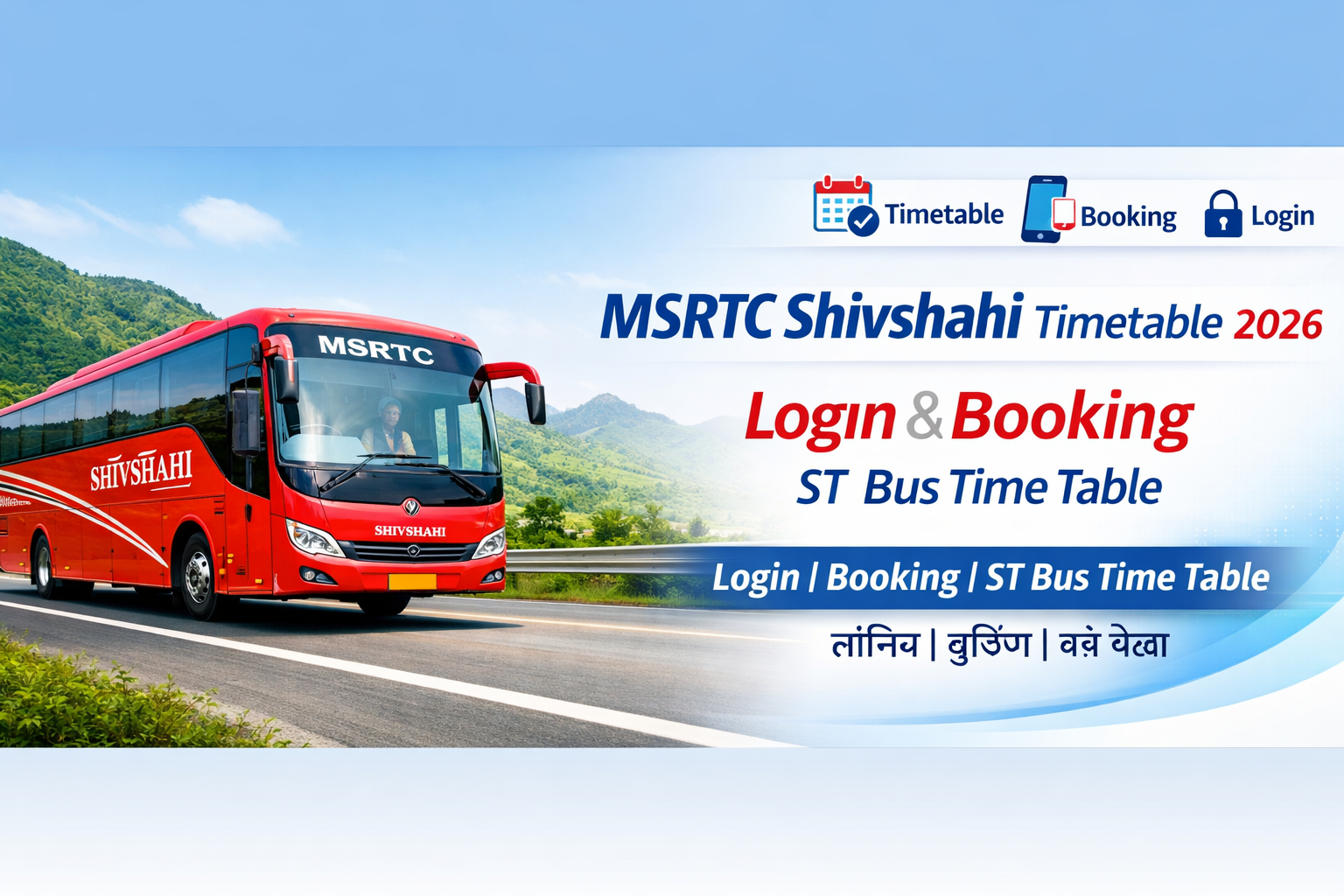
Shivshahi is MSRTC’s flagship budget air-conditioned service — the mid-point between the humble red Lal Pari and premium Shivneri coaches. Painted in a distinctive purple-and-white livery, Shivshahi buses let travellers enjoy AC comfort at fares far below private Volvo operators. This guide covers what Shivshahi offers, the corridors it serves, typical timetable patterns, fare comparisons and how to book seats through the ST Mahamandal’s online reservation system.
What Exactly Is a Shivshahi Bus?
Launched by the ST Mahamandal (Maharashtra State Road Transport Corporation) in 2017, Shivshahi is an air-conditioned service built around a simple idea: AC travel at near-ordinary prices. The standard configuration is a 2+2 pushback seater with around 43–45 seats, curtains, and mobile charging points on most coaches. A smaller number of Shivshahi sleeper buses with berths operate on long overnight corridors such as Mumbai–Nagpur and Pune–Nanded. Buses are a mix of MSRTC-owned and hired (wet-lease) vehicles, which is why interiors can vary slightly from coach to coach.
🕐 Shivshahi Routes & Timetable
Compiled from MSRTC route listings and the official booking portal. Last verified: September 2026. Route coverage and departure times change with season and demand — confirm on the official MSRTC portal or app before travelling.
What is Shivshahi?
Shivshahi is MSRTC’s air-conditioned bus service operated on intercity routes alongside the premium Shivneri (Volvo) fleet. Shivshahi buses offer reserved seating, reading lights and charging points, with fares between ordinary ST buses and Shivneri.
Major Shivshahi corridors
| Route | Boarding Point | Typical Frequency |
|---|---|---|
| Pune ↔ Solapur | Swargate / Pune Station | Multiple daily departures |
| Pune ↔ Nagpur | Shivaji Nagar / Wakdewadi | Daily service (overnight) |
| Swargate (Pune) ↔ Kalyan | Swargate | Every 1–2 hours |
| Shirdi ↔ Mumbai (Dadar) | Shirdi bus stand | Multiple daily, early-morning start ~7:30 AM |
| Satara ↔ Mumbai / Borivali | Satara stand | Multiple daily |
| Miraj ↔ Pune (via Karad, Satara) | Miraj stand | Daily service |
| Mumbai ↔ Nashik | Dadar / Thane | Multiple daily |
| Mumbai ↔ Trimbakeshwar | Dadar | Daily service |
| Mumbai Central ↔ Mahad | Mumbai Central | Daily service |
| Mahad ↔ Borivali | Mahad stand | Daily service |
| Pune ↔ Mahabaleshwar (seasonal) | Swargate | Extra services in tourist season |
How to check live Shivshahi timings
- Open the official MSRTC booking portal (public.msrtcors.com) or the MSRTC app.
- Enter your origin, destination and date — filter by bus type “Shivshahi”.
- The portal shows live seat availability, exact departure times and current fares.
Fares on Shivshahi routes typically run 30–50% below the equivalent Shivneri Volvo fare on the same corridor. Concessions for women, senior citizens and students apply as per prevailing MSRTC rules.
Major Shivshahi Corridors and Timetable Pattern
Shivshahi concentrates on high-demand intercity routes. Rather than a fixed statewide chart, each depot schedules its own departures, so the pattern below is indicative — always verify current timings on the MSRTC reservation portal or at your bus stand before travelling.
- Mumbai – Pune: The densest corridor, with departures roughly every 30–60 minutes through the day from Dadar, Borivali, Thane and Vashi to Pune, taking about 3.5–4.5 hours via the Expressway.
- Pune – Nashik: Frequent daytime services (roughly hourly at peak) covering about 210 km in 4.5–5 hours.
- Mumbai – Nashik: Regular departures from Dadar, Kurla Nehru Nagar and Thane, around 4 hours via the Kasara ghat.
- Pune – Kolhapur: Day and evening services along NH-48, roughly 5 hours for 230 km.
- Mumbai – Chhatrapati Sambhajinagar (Aurangabad): Morning and overnight departures, 7–8 hours.
- Other notable routes include Pune–Solapur, Pune–Sambhajinagar, Nashik–Sambhajinagar, Kolhapur–Mumbai and long hauls into Vidarbha and Marathwada.
In Pune, most Shivshahi departures use Swargate, Shivajinagar and Pune Station stands — see our Swargate bus station timetable for depot-level detail. In Vidarbha, Shivshahi links Amravati with Nagpur, Pune and Sambhajinagar; the Amravati bus stand timetable lists those services.
Shivshahi Fares vs Ordinary and Other Classes
Shivshahi is priced above ordinary and semi-luxury but well below Shivneri. Approximate one-way fares on popular routes (subject to revision):
| Route | Ordinary (Lal Pari) | Shivshahi AC | Approx. Duration |
|---|---|---|---|
| Mumbai (Dadar) – Pune | ₹260–300 | ₹400–450 | 3.5–4.5 hrs |
| Pune – Nashik | ₹250–280 | ₹380–430 | 4.5–5 hrs |
| Mumbai – Nashik | ₹220–260 | ₹350–400 | 4 hrs |
| Pune – Kolhapur | ₹280–320 | ₹450–500 | 5 hrs |
| Mumbai – Chh. Sambhajinagar | ₹420–480 | ₹650–750 | 7–8 hrs |
All figures above are approximate and can change with fuel surcharges, seasonal revisions and government fare orders.
How to Book: MSRTC Login and Online Reservation
Shivshahi seats are fully reservable through the ST Mahamandal’s official channels:
- Open the official MSRTC online reservation portal or the MSRTC mobile app.
- Create an account or sign in — the “MSRTC login” needs just a mobile number and email for OTP verification.
- Enter origin, destination and journey date, then search.
- Filter results by bus type “Shivshahi” to hide ordinary and Shivneri services.
- Pick a departure, choose your seat on the layout map, enter passenger details and pay by UPI, card or net banking.
- The e-ticket arrives by SMS and email; showing it on your phone with a photo ID is sufficient on board.
Advance reservation opens well before the travel date, and booking early matters on weekends and festivals when Mumbai–Pune and Pune–Kolhapur Shivshahis routinely sell out. Walk-in passengers can still board if seats remain vacant, paying the conductor directly.
Shivshahi vs Lal Pari: Which Should You Choose?
The Lal Pari (ordinary red bus) remains the backbone of ST Mahamandal operations — cheapest fares, all-stops service, and reach into villages Shivshahi never touches. Choose Lal Pari for short hops, tight budgets and rural destinations. Choose Shivshahi when you are covering 150 km or more, travelling in summer heat, or want a reserved seat on a busy corridor. Semi-Luxury sits between the two: non-AC but with better seats and fewer stops than ordinary.
Frequently Asked Questions
Is Shivshahi a seater or sleeper bus?
Most Shivshahi buses are AC 2+2 pushback seaters. A limited fleet of AC sleeper Shivshahis runs on long overnight routes; the reservation portal shows the type clearly before you pay.
Where do I find the exact Shivshahi timetable for my route?
Search your origin and destination on the MSRTC reservation portal or app for your travel date — every reservable Shivshahi departure appears with its time and fare. Bus stand enquiry counters can confirm the same.
Do I need an MSRTC login to book a Shivshahi ticket?
Yes, online booking requires a free account verified by OTP. Counter booking at bus stands needs no account.
Can I cancel a Shivshahi ticket online?
Yes. Tickets booked on the portal or app can be cancelled before departure, with a deduction that increases as departure approaches.
Is Shivshahi cheaper than private AC buses?
Usually, yes. On corridors like Mumbai–Pune, Shivshahi fares are commonly 20–40% below comparable private AC seater services, though private sleepers offer amenities Shivshahi does not.
Does luggage cost extra on Shivshahi?
Standard personal luggage travels free in the boot. Oversized items may attract a luggage charge as per ST Mahamandal rules.
This website is an independent travel information resource and has no official connection with MSRTC or any state authority; please rely on official MSRTC channels for final timings and fares.
Find More MSRTC Bus Timetables
Browse all Maharashtra ST bus routes, timetables and ticket prices